


Kentucky Acorn Mast and Whitetail Deer Health Update: What We Know for 2026

Walk a Kentucky hardwood ridge in mid-August and the ground may not tell you much yet.
Look up, though, and the season can start making a little more sense.
One white oak may have limbs carrying clusters of green acorns while the next three seem nearly empty. That difference matters, especially with Kentucky archery deer season opening September 5, 2026.
As of August 16, Kentucky Fish and Wildlife’s online mast survey listings still show the 2025 report as the latest statewide report. I haven’t been able to find an official 2026 statewide mast assessment that would support calling conditions ‘good,’ ‘poor,’ or ‘bumper’ yet.
For hunters, that makes scouting more valuable than rumors. Late summer is an ideal time to identify the individual trees carrying mast. White oak acorns develop in a single growing season and are generally selected more heavily by wildlife because of their lower tannin content. Red oak acorns take two growing seasons to mature and can become more important as fall progresses.
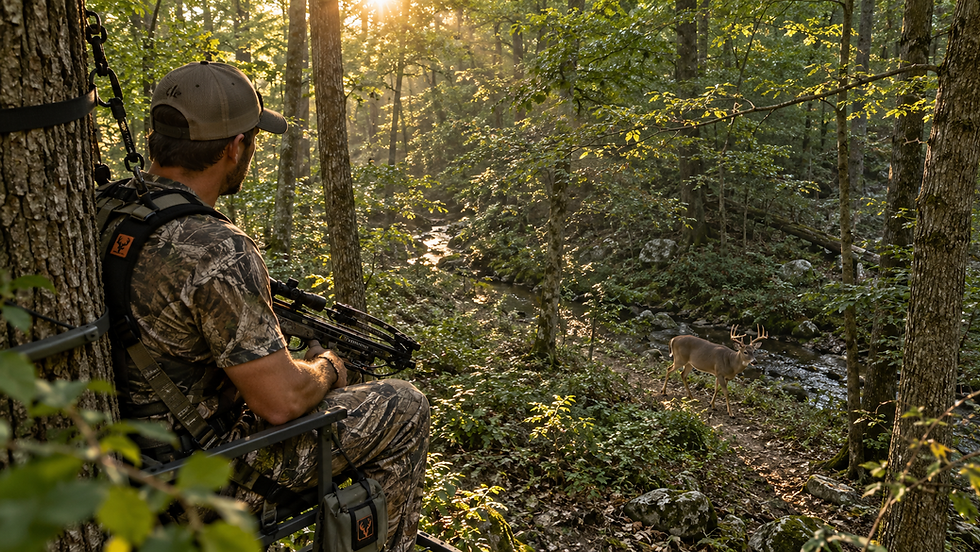
On a permission farm, focus first on productive oaks located between bedding cover and a nearby food source. On smaller properties, even a single cluster of heavily producing oaks can be enough to shift a buck’s normal travel pattern. On Kentucky public land, use old logging roads, open ridges, or other vantage points to scan promising oak areas from a distance when possible rather than walking through every potential feeding spot.
WHY DEER ARE ACTING THIS WAY
Acorns can change deer movement quickly because they put food inside the timber, often much closer to secure bedding cover. Research and extension guidance consistently note that mast abundance can alter wildlife movement and reduce reliance on alternative food sources.
That means a buck filling up a field-edge camera today may become much less visible there once preferred oaks begin dropping.
Don't assume he left the property. First check the timber.
Kentucky Whitetail Health: CWD Remains the Bigger Long-Term Concern
Kentucky entered 2026 with a more serious CWD situation than hunters faced a few years ago.
On January 7, Kentucky Fish and Wildlife confirmed the state's third CWD-positive wild deer, a Ballard County buck. It was the second wild positive from Ballard County, following Kentucky's original 2023 detection, while another wild case was confirmed in Pulaski County in 2025.
Kentucky's current CWD Surveillance Zone now covers 23 counties. Special baiting, carcass-transport and sampling rules apply within the zone for the 2026-27 season, so hunters should check their county before opening day.
Hemorrhagic disease, or HD, is a different issue. KDFWR says HD affects Kentucky deer every year, some infected deer survive, and transmission ends after the first hard frost kills the insects carrying the disease. As of August 16, I have not been able to find a KDFWR Wildlife Health notice announcing a statewide HD outbreak in Kentucky for 2026. Local sickness or mortality can still occur and should be reported.
KENTUCKY INSIGHT
Don't scout the acorn crop and the deer herd as two separate jobs. While you're checking oak flats and moving trail cameras, pay attention to deer condition and unusual mortality around creek bottoms, ponds and other low areas. Report unexplained sick or dead deer to Kentucky Fish and Wildlife rather than guessing at the cause.
CALL TO ACTION
Over the next couple of weeks, start marking the individual white and red oaks that are actually producing instead of judging the whole woods at once. Watch Bluegrass Whitetail for the next Kentucky mast and deer movement update as those first acorns begin hitting the ground.
SAFETY REMINDER
August scouting in Kentucky can still mean serious heat and plenty of ticks. Carry water, check yourself after leaving the woods, and let someone know where you're scouting, especially on remote public land.


Comments